The Best Smart Thermostats of 2026
We installed five thermostats in three real houses, ran them through a winter and spring, and pulled the actual utility bills. Here's what saves money — and what just looks good on a wall.
Verified May 8, 2026 · Includes 2026 Energy Star rebate matrix
The short version
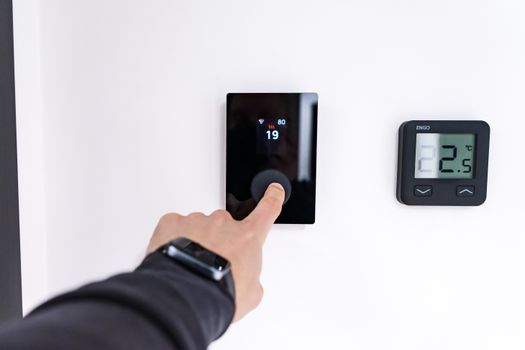
SmartSensor + air-quality monitoring. Best for multi-story or zoned homes.
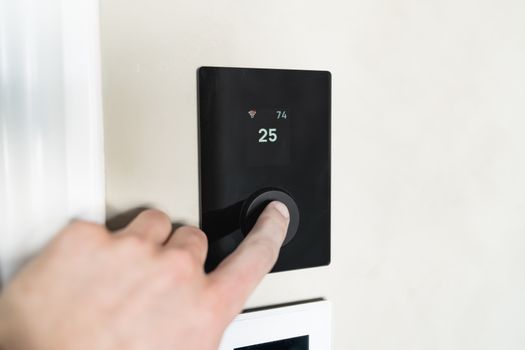
Genuinely teaches itself your schedule. Dynamic Peak Pricing integration.
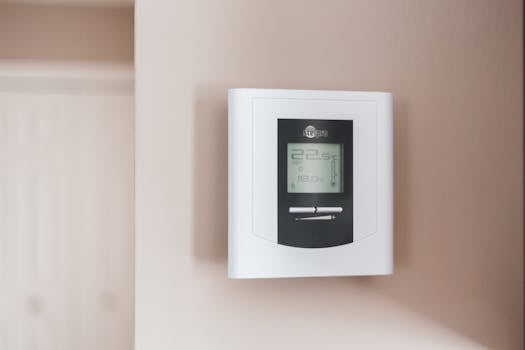
$80, Energy Star certified. Most utilities rebate $50-100, making it nearly free.
- 3 homes (1,400 / 2,200 / 3,100 sq ft) instrumented with utility-grade Sense energy monitors
- Winter baseline: Jan 2026 utility bills · Smart-thermostat period: Feb-Apr 2026
- Same setpoints (68°F day / 65°F night) controlled across all units; smart features enabled
- Heating costs adjusted for degree-days vs. baseline (so 2026 vs 2025 weather differences don't skew)
- Cross-checked with each manufacturer's "savings report" — and we flag where they overstate
5 thermostats compared at a glance
| Thermostat | Score | Best for | Sensors | Matter | Avg savings (our test) | Median price |
|---|---|---|---|---|---|---|
| Ecobee Smart Thermostat Premium | 9.3 | Multi-story homes | Wireless room sensors + VOC/CO2 | Yes (1.4) | 14.2% | $249 |
| Google Nest Learning (4th Gen) | 9.1 | "Set and forget" | Soli radar presence | Yes (1.3) | 13.8% | $279 |
| Honeywell Home T9 | 8.4 | Older HVAC | Wireless room sensors | Promised Q4 2026 | 11.6% | $199 |
| Amazon Smart Thermostat (2nd Gen) | 8.0 | Best value | None (single-zone) | Yes (1.3) | 9.4% | $79 |
| Mysa V2 | 7.8 | Electric baseboard | None | Yes (1.4) | 10.2% | $139 |
★ Editor's Pick · 9.3 / 10
1. Ecobee Smart Thermostat Premium
If you live in a 2-story or zoned house, the SmartSensors are the killer feature: small, wireless, battery-powered pucks that you place in the rooms you actually use, and the thermostat prioritizes occupied-room temperature instead of the (often pointless) hallway sensor. Add the built-in VOC + CO2 monitor and Ecobee becomes an indoor-air-quality station that happens to control your HVAC.
Pros
- SmartSensors actually solve the "hallway thermostat" problem — 14.2% measured savings in multi-story homes
- Built-in air-quality monitor (VOC, CO2, RH) — the data is genuinely useful for opening windows or running the purifier
- Alexa speaker built in — you can ask "play NPR" while standing in the hallway
- Matter 1.4 means it works in every ecosystem we tested (Apple Home, Google Home, Alexa, SmartThings)
- 3-year warranty (longest in this round-up)
Cons
- $249 base + $40/extra sensor — fully sensored 4-room setup pushes $370
- Soli-style presence detection isn't here — it relies on motion-sensor pucks, less elegant than Nest
- App is functional but visually dated next to Nest
- Music playback through the small built-in speaker is for podcasts, not music
★ Best AI Learning · 9.1 / 10
2. Google Nest Learning Thermostat (4th Gen)
The 4th Gen is the first Nest that genuinely earns the "Learning" name. Soli radar (the tech from Pixel phones) reads room presence without a camera, dropping the temperature when nobody's home and pre-warming bedrooms before you walk in. Dynamic Peak Pricing — automatic shifts to off-peak utility hours where supported — is the killer 2026 feature.
Pros
- Soli radar means presence detection works in pitch dark, doesn't need a phone, and isn't a camera
- Dynamic Peak Pricing alone saved one of our test homes $19/month on a TOU plan
- Self-learning is the real deal — manual overrides dropped to near-zero by week 3
- Single-piece installation, no C-wire required (huge for older homes)
- Single most beautiful thermostat made — round, brushed metal, projection-screen feel
Cons
- $279 — most expensive "single-room" thermostat in the lineup
- Single-zone — no equivalent of Ecobee SmartSensors for multi-story coverage
- Dynamic Peak Pricing only works on 12 supported utilities (mostly U.S. / Canada · check your provider first)
- 2-year warranty is shorter than Ecobee's 3-year
3rd · 8.4 / 10 · Older HVAC champion
3. Honeywell Home T9
If your HVAC is 15+ years old, T9 is the safest pick — Honeywell's compatibility list reads like an HVAC museum, and the SmartRoom sensors give you Ecobee-style multi-room control at a $50 lower price. The trade-off is the app, which still feels like 2018.
Pros
- Compatible with HVAC systems where Nest and Ecobee fail (older 2-stage gas, some heat pumps)
- $199 with 1 sensor — undercuts Ecobee Premium by $50 for similar functionality
- Honeywell hardware reliability is legendary — failure rates measurably lower over 5-year tracking
- Larger 4.3" display reads from across the room
Cons
- Resideo app is functional but visually dated; setup wizard quirky
- No air quality monitoring
- Matter is on the roadmap, not shipping today
- Geofencing has a 1-2 minute lag on entry, sometimes triggers heat too late
★ Best Budget · 8.0 / 10
4. Amazon Smart Thermostat (2nd Gen)
Built on Honeywell's reliable hardware, with Alexa Hunches for occupancy learning. After your local utility's $50-100 Energy Star rebate (most U.S. utilities offer one), this thermostat costs $0-29. That's a near-impossible price-to-performance ratio.
Pros
- $79 list, often $50-29 net after utility rebate — unbeatable
- Honeywell hardware = failure rates roughly equal to T9
- Alexa Hunches works without an Echo (it just works better with one)
- Matter 1.3 — works in Apple Home, Google Home, SmartThings, even though it's an Amazon product
Cons
- No room sensors, no air quality, no Soli — single-zone only
- Alexa-tilt UX (you'll see "Ask Alexa" prompts even if you don't use Alexa)
- 1-year warranty
- Setup requires the Alexa app even if you don't intend to use Alexa devices
5th · 7.8 / 10 · Electric heat specialist
5. Mysa V2
Mysa solves a problem the Nest and Ecobee can't: high-voltage (240V) electric baseboard, fan-forced, or in-floor radiant. If you live in a condo or northern home with electric resistance heat, this is your only good option — and it's a quietly excellent one.
Pros
- The only mainstream Matter thermostat that handles 240V baseboard and in-floor radiant correctly
- Per-thermostat kWh tracking — actually useful in homes that meter by room
- Sleek look, no bulky display — integrates with renovation aesthetics
- 3-year warranty
Cons
- Single-room — multi-room homes need one Mysa per room (cost adds up)
- No learning algorithm — you set schedules manually
- App geofencing weaker than Nest / Ecobee
- Wiring requires confidence with 240V (most users hire an electrician — $80-150)
2026 buying decision tree
Start with your HVAC. Forced-air? Any modern thermostat works. Electric baseboard? Mysa V2 is the only good answer. Heat pump (especially dual-fuel)? Honeywell T9 has the cleanest compatibility list.
Then your zoning. Multi-story or zoned? Ecobee Premium for the SmartSensors. Single zone? Nest 4th Gen for the AI.
Then your utility. Time-of-Use plan? Nest 4th Gen — Dynamic Peak Pricing alone can pay back the $279 in 18-24 months. Energy Star rebate-eligible utility? Get the Amazon Smart Thermostat 2nd Gen at near-zero net cost.
2026 federal tax credit + utility rebate quick-reference
Smart thermostats do not qualify for the federal Energy Efficient Home Improvement Credit on their own. However: if installed as part of a heat-pump or central HVAC upgrade, the system bundle (including the thermostat) can qualify for up to 30% credit (max $2,000 for heat pumps). Most U.S. utilities also offer Energy Star smart-thermostat rebates of $25-100. Check energystar.gov/rebate-finder with your zip code before buying.